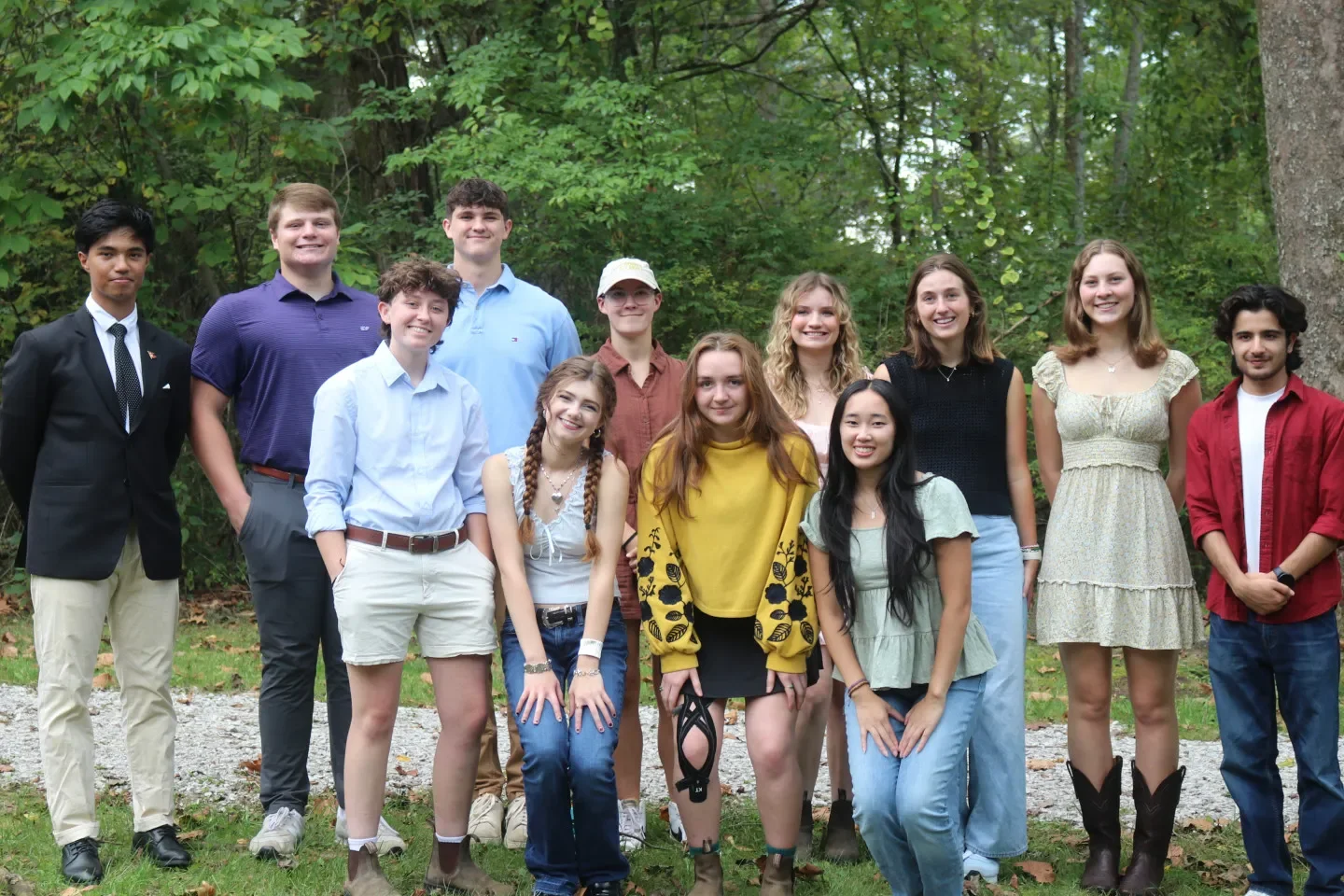
On any given Friday afternoon, if you see a huge commotion in the Mary Sue Cushman room at the Bairnwick Women’s Center, know that it is coming from more than 60 Sewanee student-leaders who are gathered there for training and conversations about how to serve in the name of EQB.
The Bonner/Canale Program, housed within Sewanee’s Office of Civic Engagement, is as Program Director Robin Hille Michaels describes, “a strong community of students with a passion for service and a commitment to building long-term relationships in the community to support the work of our partner organizations.”
The Canale Program began in 2007 with an endowment gift from John Canale (C ’67), a Memphis resident familiar with the Rhodes College Bonner Scholar Program. He envisioned a Sewanee-based initiative that would serve the underprivileged communities surrounding the University. During the first year, the Canale program supported around 10 interns per year.
In 2011, Professor Jim Peterman met Bobby Hackett, president of the national civic engagement organization Bonner Foundation, and recognized that Sewanee could join a broader network of institutions practicing community-engaged learning. By fall 2012, Sewanee welcomed its first official class of Bonner Leaders.
Today, the program blends both Bonner and Canale students into a single, collaborative cohort. First-year students are recruited as Bonners before they arrive on campus, and sophomores may join as Canale Leaders. Together, they form a developmental, four-year experience centered on sustained regional partnerships.
The mission of the program is clear: developing Sewanee Bonner and Canale Leaders to respond to community-identified challenges through collaboration with sustained regional partnerships.
Participation in Bonner/Canale requires 10 hours per week of service and learning. Students attend weekly Friday meetings designed to deepen their growth as servant leaders, while spending the remainder of their hours serving with local partners.
Michaels compares the time commitment to that of a scholar-athlete. “Bonner/Canale is a time commitment,” she said. “Students quickly learn to find the times when they can work at their sites, and times when they can commit to their studies.” The program encourages time blocking to help students balance coursework, service and study.
Service as a Bonner/Canale may take form as becoming a tutor, mentor or assistant in community sites. Others build websites, write grants, organize fundraisers or support income tax assistance programs. The program currently works with 34 partners and projects ranging from schools in Marion County, Grundy County, Franklin County and Coffee County to food pantries around campus, many of them small nonprofits in the region.
Unlike some Bonner institutions that collaborate with 10 to 15 larger organizations, Sewanee’s model offers students a wide range of services connected to medicine, law, animal welfare, community arts, financial health, jail outreach and more.
Apart from my Canale site, last semester I volunteered with New Life, a site based in Winchester, Tenn. that acts as a day home for people with disabilities. New Life brings 10-12 people to campus, and we take them to different recreational activities. I remember teaching them how to make paper lanterns, and they all surrounded me, taking notes and listening intently. Whenever they were struggling to apply glue in the papers, they would return again and again and ask me to show them how to do it. Once their lanterns were assembled, each of them beamed with happiness and kept showing me the lanterns they had made. Other activities included hiking in Abbo’s Alley and picnics at Lake Cheston, farm and St. Marks. I felt so much fulfillment each week as I helped them.
For Michaels and the Office of Civic Engagement, strengthening trust between Sewanee and the surrounding community is central to the program’s work. When the OCE began its efforts, staff recognized what Michaels described as “significant distrust of the University,” built over decades of inconsistent contact and, at times, condescension toward neighboring communities. Freshman training now includes workshops on cultural sensitivity, the history of Sewanee’s relationship with Black residents and neighboring communities, and the importance of building partnerships grounded in consistency, respect, and collaboration.
Community partners select and approve student leaders working with them and verify the student’s service hours. The program seeks regular feedback through evaluations, focus groups, newsletters and ongoing communication.
“We believe relationships are improving,” Michaels said. “However, this work is slow and long, and by no means complete.”
Each year of the program builds on the last. First-year Bonners focus on relationship-building, cultural awareness, and professional communication. Sophomores, now a blend of Bonner and Canale students, explore their strengths as servant leaders and step into leadership roles. Juniors learn about effective community impact, fundraising and philanthropy, asset mapping, coalition building, and writing issue briefs on community-identified challenges. Seniors turn toward life after Sewanee, preparing for graduate school or careers while engaging in a semester-long reflective practice Capstone project culminating in a digital reflection on their Bonner/Canale journey.
The program also creates space to examine privilege, bias and social justice. Weekly workshops invite students to discuss complex campus and global issues, learn to bridge divides and practice working across differing perspectives. The goal, Michaels said, is for students to learn “how to work on the world’s complex issues with anyone.”
For many students, this formation shapes their future paths. Some express a desire to attend medical school or pursue graduate work in public policy related to the communities they have served. Yet, Michaels emphasizes that Bonner/Canale is not solely a pipeline into nonprofit careers; instead, it equips students to be active citizens–whether through their vocation or avocation.
Students consistently point to the sense of belonging within the program as one of its most meaningful aspects.
“I have connected with other students who are just as passionate about service as me, which has allowed us to collaborate in working with our community,” said Shelby Wilson (C ‘28), who serves as a site leader at Campora Family Resource Center.
For Ashton Mize (C ‘28), site leader at the Adult Language Learning Center, the program’s internal formation is equally significant. “Our workshops have given me the opportunity to build my leadership skills to help my site and grow closer to my cohort so that we can better serve together,” Mize said.
With more than 60 students participating, Bonner/Canale places heavy emphasis on cultivating internal connection through weekly programming and consistent communication. Michaels believes that having a larger cohort of servant leaders strengthens campus culture, shaping how students understand what it means to be a good neighbor–both within the gates and beyond them. The program hopes to continue recruiting students who see themselves as civic leaders, campus contributors and changemakers, while deepening trust with community partners.
“I’ve come to appreciate the importance of going slow to go fast,” she reflected, recalling advice from former OCE colleague and now Dean of Students Nicky Campbell. Michaels has learned to recognize that “the real expertise is within us, and this is especially true for our community partners. They know best what their community needs and how to address it.”
Even amid daunting global challenges, Michaels expressed hope. She said, “We have the ability to effect real, positive change when we pull our resources and strengths together to work on a shared vision of what might be.”
Her advice to students considering applying is simple: “Go for it. Don’t doubt yourself.”
The Bonner/Canale Program aligns with Sewanee’s broader commitment to cultivating “informed, self-aware, and participatory citizens for our democracy and servant-leaders for the world.” Bonner and Canale Leaders are learning that service is a long-term investment in people and place and not just a title.
click the following link to view the full article.