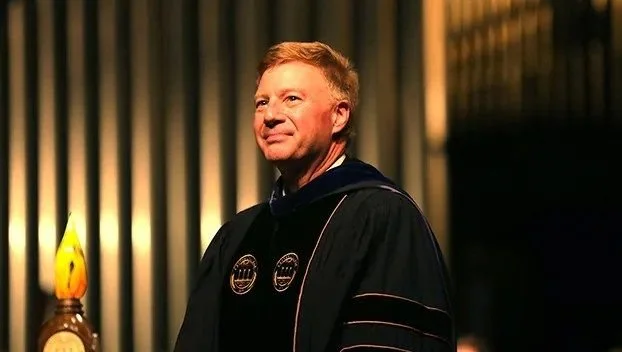
Milton Moreland’s civically engaged scholarship reflects what Bonner Programs at Rhodes College and Centre College cultivate every day: students and educators putting community engagement, equity, and active citizenship into practice.
Rhodes College and Centre College are both home to Bonner Programs, where students and educators live Bonner’s values through sustained community partnerships. Bonner campuses can see themselves in this model. This story is a strong example of:
Course-based community engagement (civic work integrated into teaching and learning)
Equity-centered partnership (stewardship of community history and place)
Active citizenship (education tied directly to democracy and public problem-solving)
From a small grant to mow and restore a forgotten Memphis cemetery, Milton Moreland built a career that took him from professor to President of Centre College. His journey is a testament to how civic engagement work can open unexpected doors in higher education.
This article is the first of two spotlights on how two former grantees of our Periclean Faculty Leadership Program became college presidents, which you can learn more about in our introductory piece. It is part of our Impact25 series, commemorating Project Pericles’ 25th anniversary.
When Milton Moreland joined as a faculty member at Rhodes College, Zion Community Cemetery was off the map—literally. Most modern maps lacked a marker for the location. This first post-Civil War African American Cemetery in Memphis spans 17 acres in the heart of Memphis and contains over 40,000 burials.
During those years, then-Professor Moreland volunteered during his weekends mowing and cleaning the cemetery. Soon, he realized there was a learning opportunity for his students to “take responsibility for where you live and the community.”
The challenge was that there wasn’t a clear connection to the courses he was teaching. So when he learned about a small grant program supporting faculty to integrate coursework with meaningful engagements outside of the classroom, he jumped at the opportunity—and was funded by Project Pericles with a Civic Engagement Course Grant (now called the Periclean Faculty Leadership Grant).
“Building the course with the help of Project Pericles was like that next step of connecting the dots between my teaching and scholarship on ancient religions, world religions, myth, and ritual—and an actual hands-on project that was a few miles away from campus,” he says.
In the Spring of 2011, he created the course Religious Studies 286: Death and the Afterlife and joined the first cohort of Project Pericles’ program. Students conducted analyses of ritual studies, history, and archaeology, going deeper into exploring the practices related to death in modern America.
Meanwhile, they traveled regularly to Zion Cemetery, helping to plan and implement restoration projects. Unmarked graves demanded archival research, and the students developed materials to understand the “long-term relationship between local communities and historic cemeteries.”
As a part of the program’s first group, then-Professor Moreland appreciated the cohort learning model. “It was fun to be associated with Project Pericles, with other scholars who were trying to do similar things.”
The personal benefits of participating in the program were unclear to him in its immediacy, but his involvement created more avenues for visibility at his institution: “The President knew about my project. The VPs all knew about it.”
The grant-writing component of community-engaged projects opened another door. “Then all of a sudden, it’s like, ‘hey, that’s a cool project,’” he says. “That opportunity pulled me into more administrative work.” Colleagues at Rhodes took interest in his abilities to manage grants, and he began to take on greater responsibilities—and develop more relationships—related to integrating civic engagement into the course curriculum.
For example, he supported students who were interested in bridging their clubs and fraternities with service. The new roles and continued support for other projects gave him an opportunity to work with more administrators. “That leads to some level of recognition from the Provost or the President saying, ‘You do pretty well at pulling people together.’”
Those newfound responsibilities led him to participate and eventually direct the “Rhodes Institute for Regional Studies.” The summer program gave scholars an opportunity to have some of their civic engagement coursework awarded. Faculty had the opportunity to take their students to conduct research and creative projects through the regional lens of Memphis or the South more broadly. He became an advocate for his colleagues to do community-engaged work that had previously been unrecognized and undervalued.
This work ultimately led to a new role: Moreland became the founding director of what would become known as the Lynne & Henry Turley Memphis Center, supporting students to engage with the Memphis community.
The role became an opportunity to “expand my horizons,” as he began to present more frequently at conferences. Project Pericles gave him the opportunity to present his work at the annual AAC&U conference in 2012. “And before I know it, I’m going to AAC&U meetings every year.”
Moreland observed that the scholars he supported—and those who were involved in civic engagement—were able to find “incredible rewards, regardless of their field.” Their students were more easily able to see the relevance of their work, which improved engagement regardless of whether they were historians, biologists, or psychologists.
“You start wondering, ‘Well, who do you want at the table representing great faculty?’ And sometimes, it’s going to be you. I came to that conclusion with a little bit of encouragement.”
He subsequently became the Vice President for Academic Affairs and then Provost.
Inhabiting an administrative role gave him the perspective and energy to support other “great scholars” and thinking about student learning. He began to think more broadly about the residential liberal arts experience.
Having the broader perspective of an administrator also brought new questions about the value that liberal arts colleges brought. He found himself often in conversations about “the big value statement of a liberal arts college.”
After six years as Provost at Rhodes College, he was selected as President of Centre College by their Board of Trustees, assuming the role during the COVID pandemic. At Centre, he launched a strategic planning initiative that has led to new investments in career readiness, campus well-being, and, without surprise, experiential learning and community engagement.
From his current leadership position, President Moreland sees civic engagement and education as deeply linked. “The whole thing is tied to citizenship. As you think about your big mission, you’re clearly thinking about the fact that we need great leaders for democracy. And there’s never been a more important time to have dynamic leaders coming out of colleges like ours who think creatively and build bridges.”
“I’m trying to help students be great citizens—the heart of why liberal arts colleges were established.”
Look out for a profile of Ron Cole, another Periclean Faculty Leader who now serves as President of Allegheny College, in Pericles in Practice on June 17th, 2026.
To read the original article published by Project Pericles click the following link.
Bonner Values at Work
Bonner campuses can see several familiar lessons in Moreland’s story. It begins with sustained partnership—a long-term commitment to community places and relationships, not one-off projects. Over time, that commitment becomes a powerful context for student development, as students build research skills, reflection habits, and accountable leadership through real relationships.
The work is also grounded in equity and place, honoring community history and priorities while stewarding sites that hold meaning for local communities. And ultimately, it points toward active citizenship: connecting education to democracy, belonging, and public problem-solving in ways that prepare students (and institutions) to lead with purpose.
Project Pericles National Partnership
Project Pericles is a long-time national partner of the Bonner Foundation, helping connect Bonner campuses into broader communities of practice focused on civic learning and democratic engagement.
Interested in course-based community engagement at a Bonner campus? Explore Project Pericles’ Periclean Faculty Leadership resources and connect with Bonner Foundation staff to identify opportunities to pilot or scale faculty-led civic learning.