Rooted in Partnerships, United in Purpose
The 2025 Bonner Fall Network Meeting convened November 10-13 at the Claggett Center in Adamstown, Maryland, bringing together 100 administrators, faculty, and partners from 52 institutions across the Bonner Network. Addressing the theme Rooted in Partnerships, United in Purpose, the gathering provided a space for professional development, strategic planning, and community building as staff and faculty from across the Bonner Network explored how their work with civic learning and community engagement addresses critical challenges facing campuses, communities, and the nation. Throughout the four-day gathering, attendees engaged in strategy sessions, elective workshops, design clinics, and social activities designed to strengthen relationships and build capacity for their work back home.
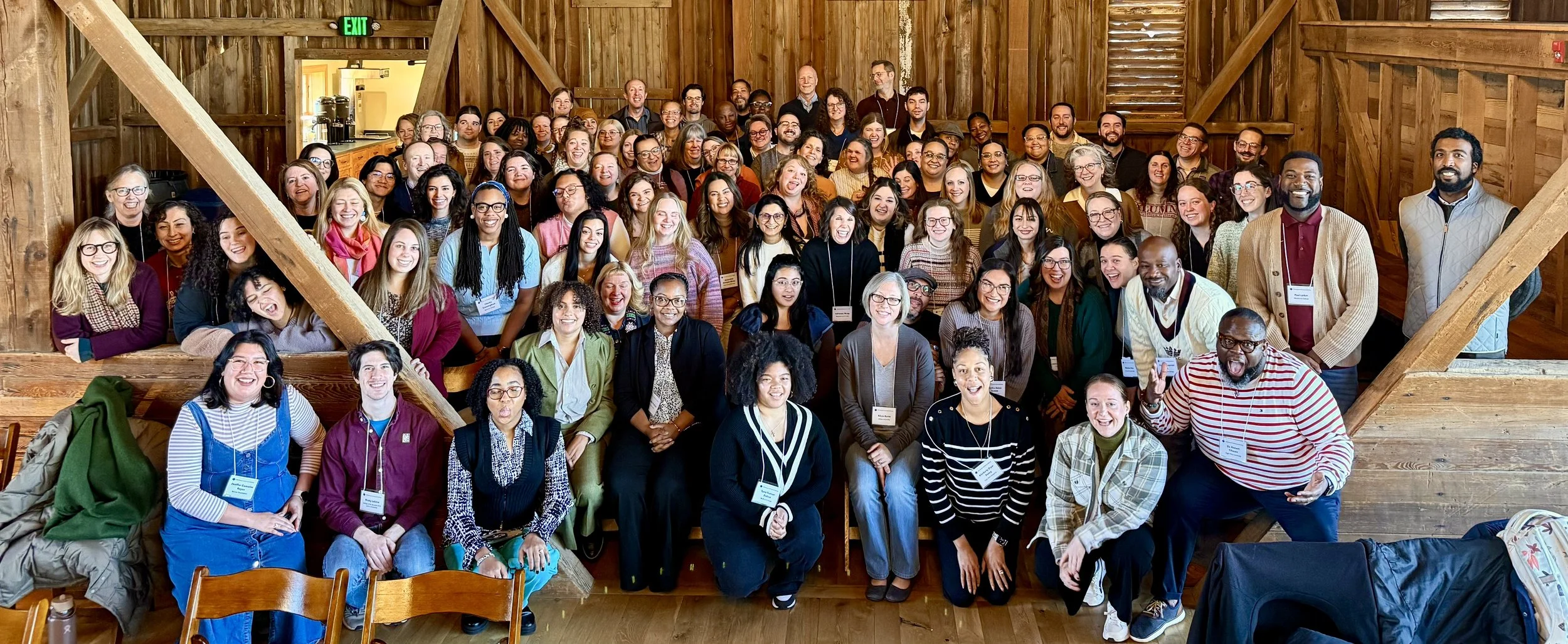
About 100 people from 55 colleges, universities, and partner organizations attended this year’s meeting.
The meeting opened Monday evening with an all-group session that invited these Community Engaged Professionals (CEPs) to delve deeply into how their work addresses current challenges faced by higher education and our communities. Participants shared uplifting stories about how students, professionals, partners, and their institutions have sustained providing critically needed services to individuals and families in their home communities. They discussed how they responded to continue breaking down social, cultural, political and other barriers through campus and community programming. They also shared innovations and best practices from these efforts.
National Partners Supporting the Network
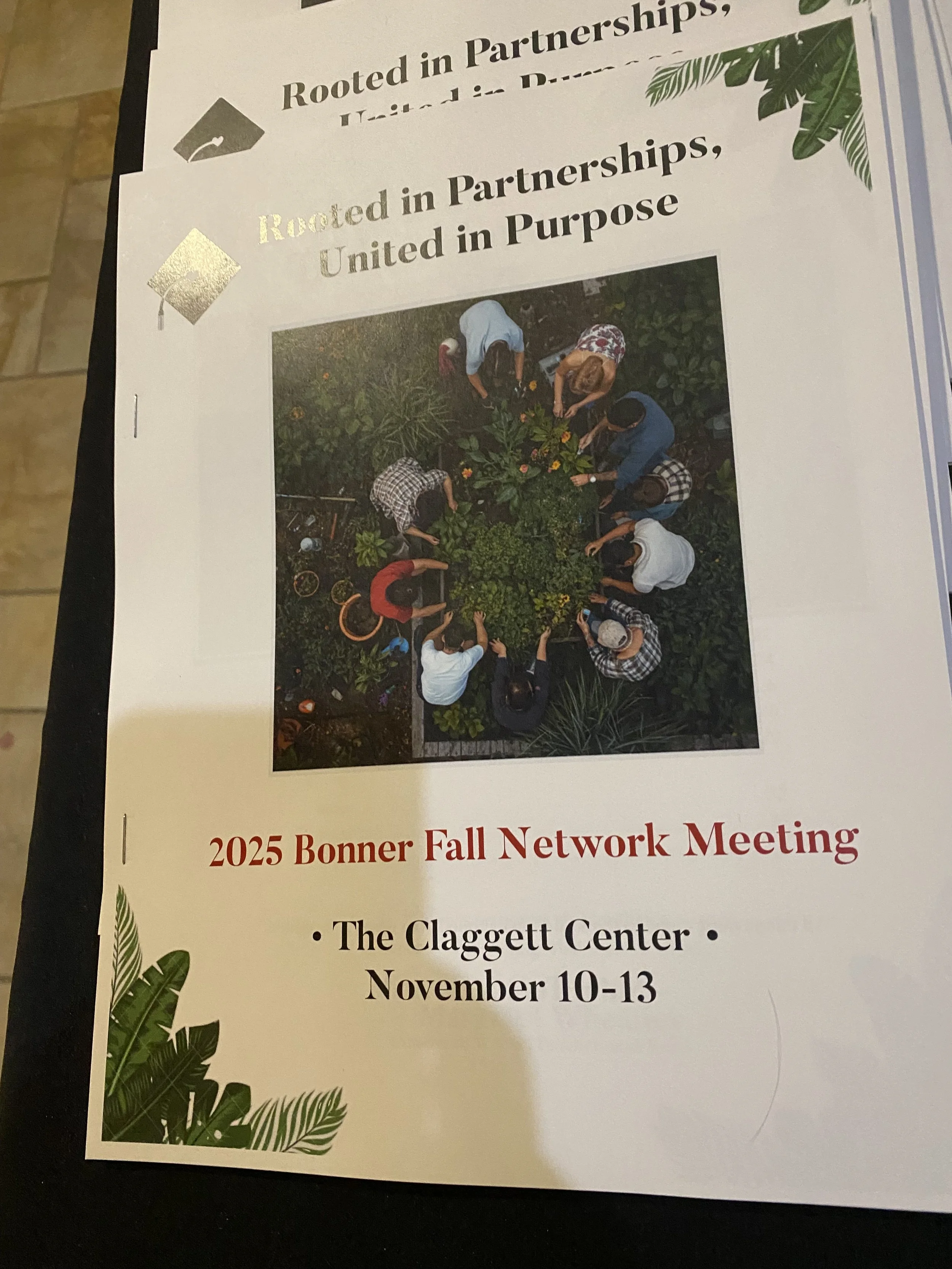
Find the agenda and materials on the Bonner Wiki here.
Three national partners joined the meeting to share resources and deepen connections with the Bonner Network. Career Spring, which has offered services to students across the network, works to ensure every first-generation, low-income (FGLI) student in the United States acquires meaningful, high-quality employment. Their platform provides career information, opportunities for enhanced social capital, and job placement services to support FGLI students. Representative Eliane Abou-Assi attended to share Career Spring's offerings with network members, speaking during the Bonner Business and career strategy sessions, and showcasing Career Spring’s approach during a longer workshop.
Common Ground USA brings expertise in harnessing the transformative power of storytelling to unite communities and bridge divides. The organization advises national leaders on policies and investments that further peace building, trains administrators through bootcamps on dialogue across differences, and equips future leaders to address divisions in their communities. Program Manager Maxine Rich joined the meeting to share Common Ground's approaches with network participants. Over the past few months, several administrators from across the network have participated in Common Ground USA’s free training Bootcamp, recommending it to others.
GivePulse, a platform used by many institutions in the Bonner Network to track campus-wide community engagement, provides tools for listing, finding, organizing, and measuring social impact initiatives. Jana Schroeder, who ran the Bonner Program at Earlham College for two decades, and Michael Almond from GivePulse attended to provide effective strategies for leveraging the platform to track service, training, and enrichment hours, generate reports on community partnerships, and demonstrate student learning and community impact.
Strategy Sessions: Building Institutional Capacity
A centerpiece of the meeting was three rotating strategy sessions offered on Tuesday and Wednesday, allowing campus teams to attend multiple sessions and develop action plans around critical institutional priorities.
Building Blocks of Campus Resilience: Caring for Ourselves, Our Students, and Our Institutions focused on developing practical strategies for addressing polarization and toxic conflict on campus. Facilitated by Maxine Rich from Common Ground USA and Liz Brandt from the Bonner Foundation, the session helped participants understand the building blocks of campus resilience, practice collaborative approaches that interrupt cycles of polarization, and strengthen self-care as a foundation for resilience. Participants explored how to advocate internally for relational, trust-based approaches to campus conflict while developing hands-on strategies from experienced practitioners.
Supporting Students' Career Readiness, Alumni and Professional Networks, and Reflection provided campus teams with concrete tools to enrich students' career preparation and post-graduate outcomes. Facilitated by Ariane Hoy and Rachayita Shah from the Bonner Foundation, with contributions from Eliane Abou-Assi of Career Spring, the session introduced ready-to-use resources including 40+ National Alumni Advisors who have offered to conduct informational interviews, review resumes, and make introductions for students. Participants also received an updated Reflection Suite with prompts connecting the developmental model to career readiness. The session emphasized tangible strategies like cohort-based workshops while allowing campus teams to refine their approaches to integrating practices that support post-graduate success.
Recruiting, Enrolling, and Supporting Students addressed how Bonner Programs connect to institutional enrollment priorities, particularly for diverse service-minded students. Facilitated by Bobby Hackett, Jeniffer Gonzalez Reyes, and Richard Harrill from the Bonner Foundation, participants mapped how campuses structure financial supports and other benefits for Bonner students, discussed how institutions position community engagement in student recruitment and marketing, and explored strategies for improving recruitment and enrollment. The session helped participants make the case for campus-wide community engagement in partnerships with admissions and financial aid offices while identifying practical tips for generating more applicants through external pipeline partnerships and revised application processes.
Professional Development and Network-Led Learning
Beyond the strategy sessions, the meeting featured elective workshops where network members shared their models, best practices, and innovative approaches. Tuesday morning's workshops included:
Developing Bonner+: Engaging our Campus Communities (Liv Nettesheim, Centre College)
Let's Talk Bonner: Stories that Stick (Anna Sherrill, DePauw University and Liz Brandt, Bonner Foundation)
Motivation Beyond Capstone: Best Strategies on Engaging Third and Fourth Year Bonners (William Teer, University of Mississippi)
Show Me the Data (and Donors) (Taylor Hibel, Stetson University)
Unlocking Bonner Insights with GivePulse (Jana Schroeder and Michael Almond, GivePulse; Nathan Whitlock, Centre College; Courtenay Folk, Carson-Newman University)
Wednesday afternoon's workshops offered additional learning opportunities:
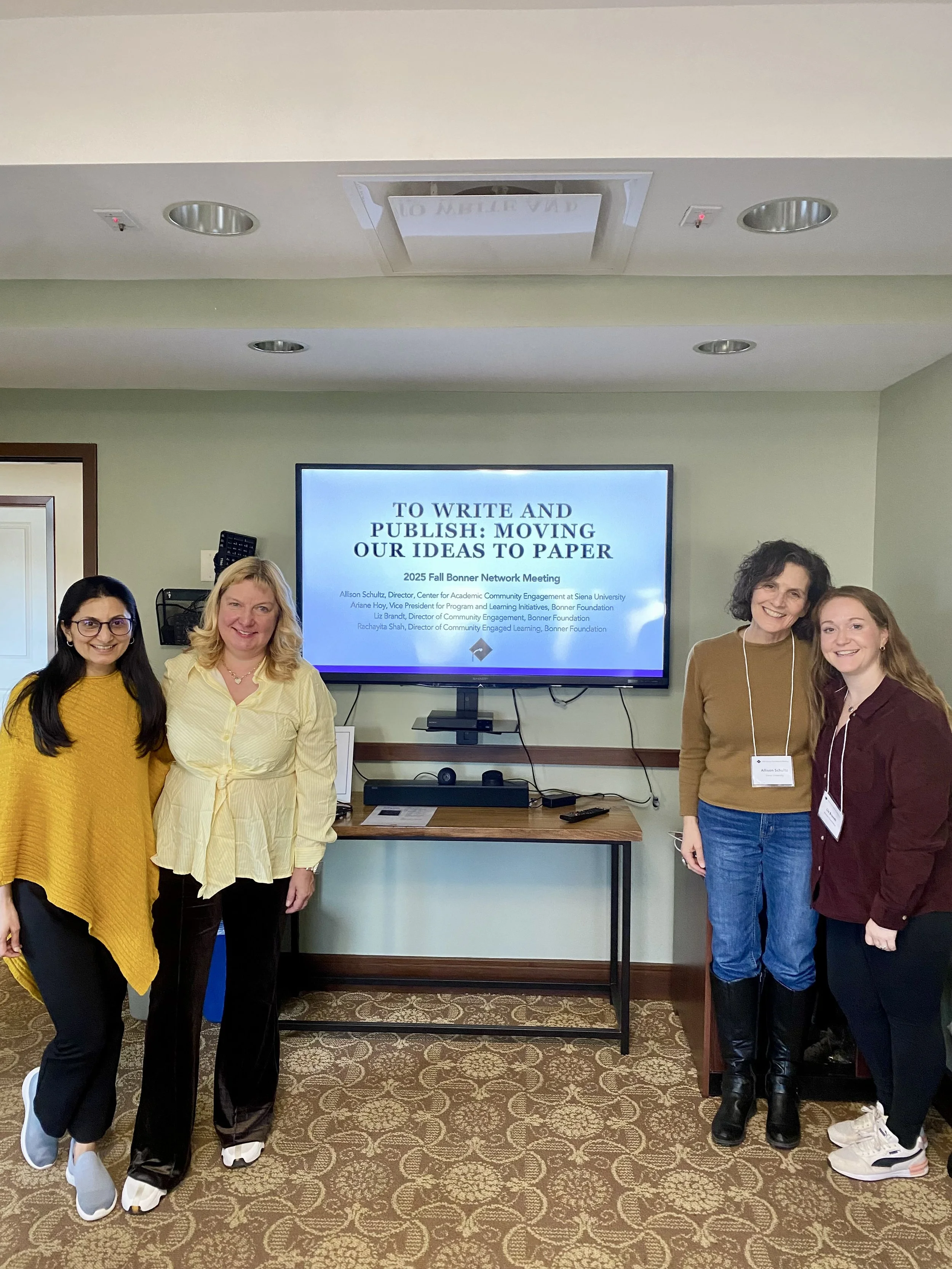
Rachayita Shah, Ariane Hoy, Allison Schultz, and Liz Brandt facilitated a discussion where staff and faculty explored their interests in writing and publishing.
All Hands In: Uniting Campus and Community through the Community Action Alliance (Mikaela Guzman and Sofia Perez, Montclair State University)
Bonner Student Leadership: Opportunities and Challenges (Jessie Weasner and Nathan Whitlock, Centre College; Anna Sherrill and Valerie Rudolph, DePauw University)
Empowering FGLI Students Through Career Resources (Eliane Abou-Assi, Career Spring)
Partnering Across Campus to Support Bonner Programming (Alicia Burns, Wilkes University)
To Write and Publish: Moving Our Ideas to Paper (Allison Schultz, Siena University; Ariane Hoy, Liz Brandt, and Rachayita Shah, Bonner Foundation)
As Allison Schultz, Director of Academic Community Engagement at Siena University, shared,
“I was excited to present To Write and Publish: Moving our Ideas to Paper with my colleagues from the Bonner Foundation—Ari, Rachayita, and Liz. This session brought together a diverse group of Bonner faculty and administrators who are interested in memorializing their work, ideas, and wonderings. We weren't quite sure if there would be interest in this topic, but clearly there was! The session took the group through a series of activities and prompts that pushed us all to think about why we write, what is important about documenting our ideas, and showed us how varied and robust the work is across the network. Reflecting on the value of the meeting, Allison added, “The Bonner Network Fall Meeting always comes in the nick of time—just as the fall semester turns towards the final weeks and we all start longing for winter break! It is a much needed mid-semester pause. Because my campus is currently going through a major restructuring process, I particularly appreciated the session on building bridges on campus as it helped me to consider new approaches and ways of finding opportunities instead of focusing on lost connections and pathways.”
Tuesday afternoon featured a professional development session titled AI: Friend or Foe? Let's Explore, which addressed concerns about Artificial Intelligence in higher education while demonstrating practical use cases for managing Bonner Programs and campus-wide engagement.
Wednesday afternoon included optional Design Clinics, where participants engaged collective wisdom around specific challenges using a structured format, and Dyads, a tradition borrowed from Centre College involving meaningful walks and conversations with colleagues.
Building Community and Taking It Home
Throughout the meeting, casual social time allowed participants to build and deepen relationships. Evening receptions featured games, community building activities, and Wednesday night's campfire with s'mores. Tuesday's all-group session on Building Bridges on Campus and Beyond helped participants map stakeholders and allies while discussing effective practices for collaboration with key institutional partners including Admissions, Advancement, and Academic and Student Affairs.
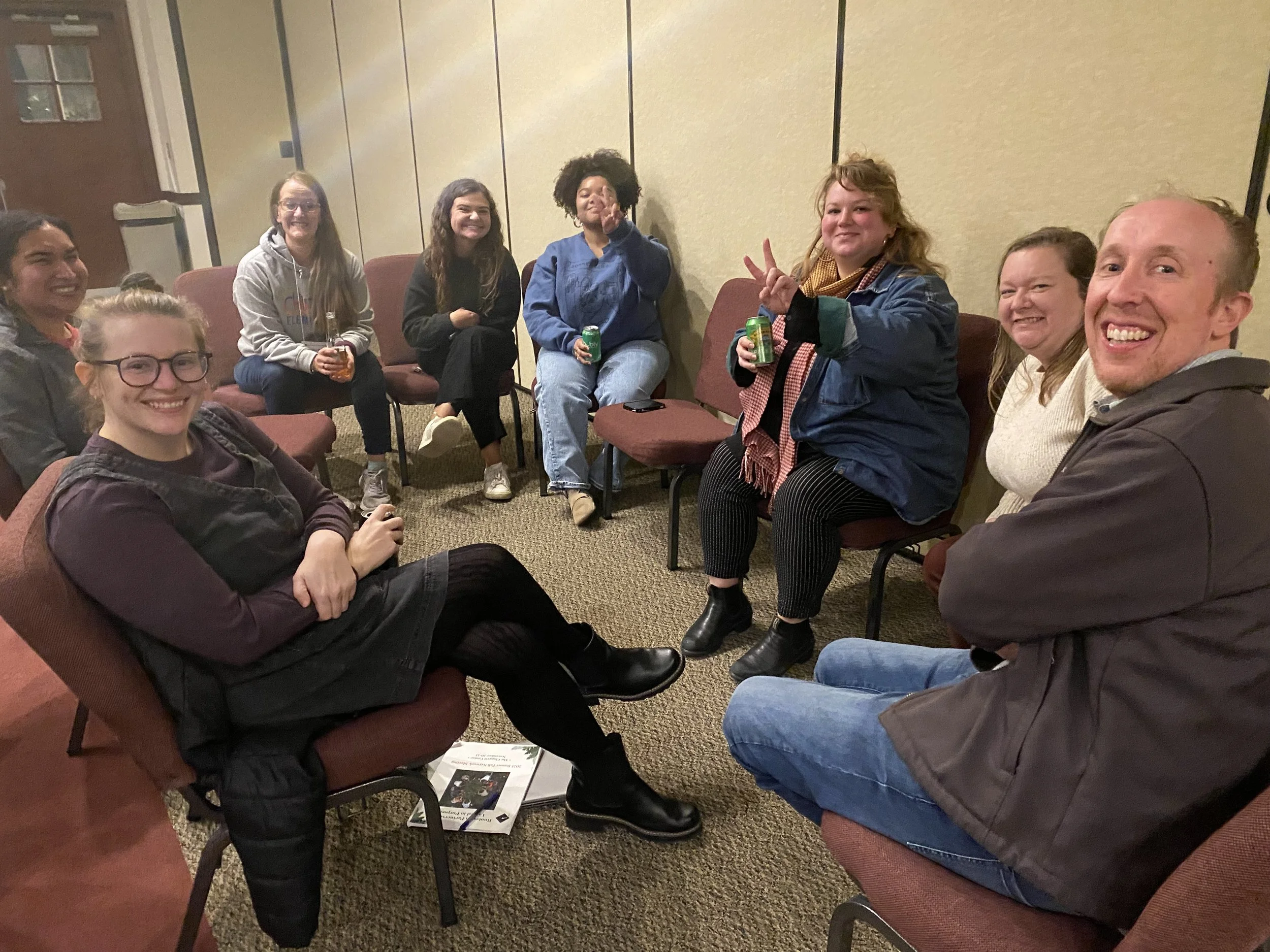
Staff and faculty from around the network enjoy planning and reflecting together.
The meeting concluded Thursday morning with Taking It Home: Campus Plans, where participants refined their strategies, followed by a closing reflection circle where the community shared moments of connection and gratitude. As Ian McGinnity, Director of Community Engagement at the University of Tampa, remaked,
“I left the gathering with a few career focused takeaways to implement. First, I want to work with the UTampa Bonners to better articulate their Bonner experiences in both their resumes and in conversations/interview responses. This could also be a good opportunity for academic integration with faculty from popular Bonner majors discussing transferrable skills.”
Foundation staff shared information about the newly recruited alumni who are willing to meet with current students to offer resume, job hunting, graduate school, and other advice.” Ian expressed excitement to share this opportunity with students,
“Second, I want to encourage my second and third year Bonners to utilize the Bonner National Alumni Advisors. We discuss the importance of networking which might be new or intimidating to students. Having Bonners participate in informational interviews with the advisors who were previously in their roles could help develop their confidence and inspire them to develop their own professional networks.”
As participants departed the Claggett Center, they carried with them deepened relationships, practical tools, and renewed energy for their work supporting student development, community impact, and institutional change across the Bonner Network. The four-day gathering embodied its theme, demonstrating how the network remains rooted in partnerships while united in purpose to strengthen civic engagement and democratic participation.